
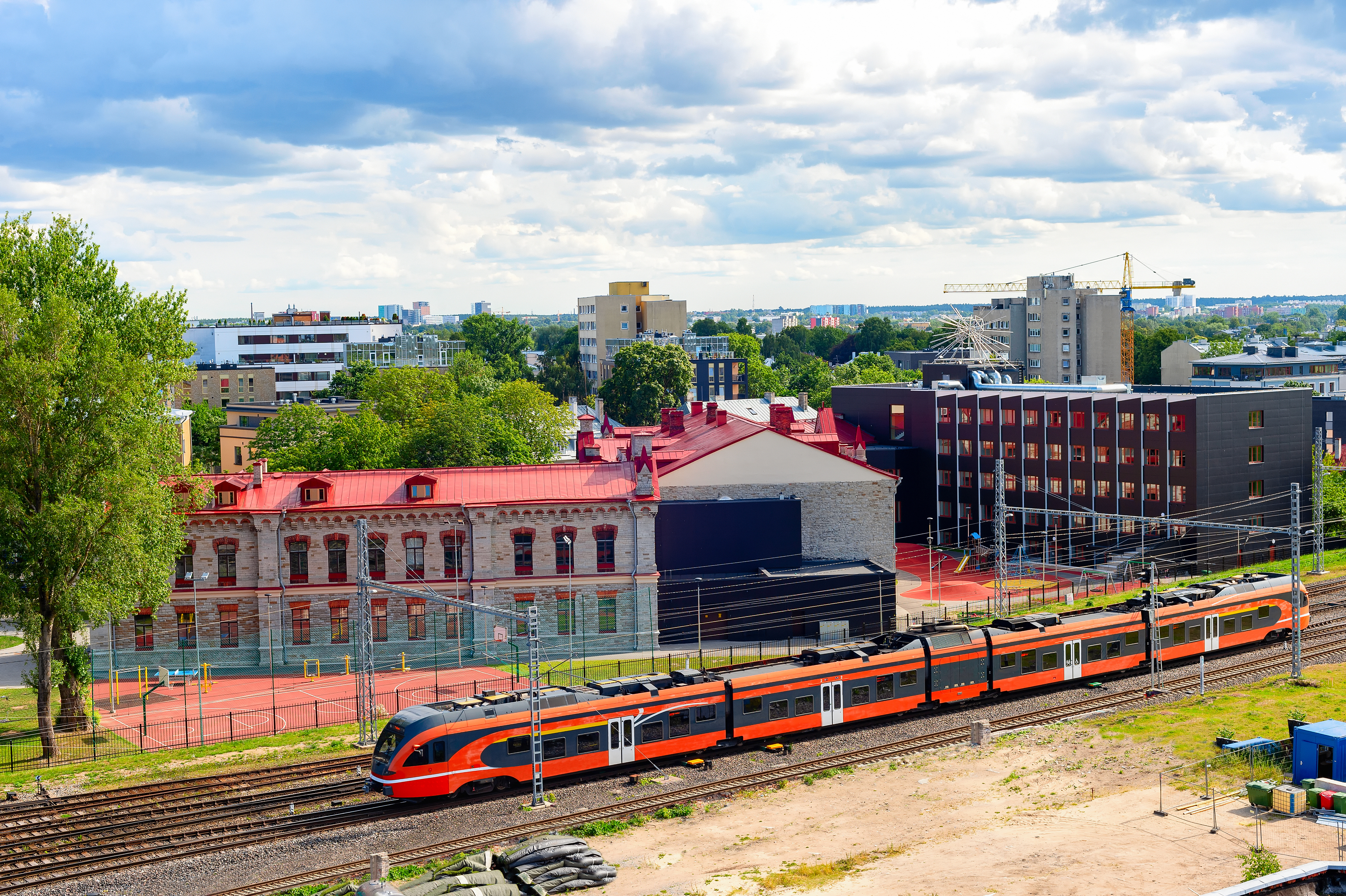
The government approved a railway development plan until 2028, which envisages investments worth nearly 900 million euros to electrify the existing railway and increase speeds to 160 km/h in the direction of Tartu, Narva, Viljandi and Haapsalu.
According to the Minister of Economic Affairs and Infrastructure Taavi Aas, the continuous development of the railway is turning the rails into the backbone of all transport. "The number of passengers by train has doubled since the arrival of new trains and we expect a similar growth from this decade," said Aas. By the end of 2024, six new more comfortable trains will arrive in Estonia to serve more passengers. It is also possible to use the option to purchase ten additional trains. "There are 90 million euros available from the Modernization Fund for the purchase of ten additional trains, which will cover the entire cost of the additional trains. We need more trains to offer a tighter timetable on electrified and straighter railways,” added Aas.
According to the railway development plan, the railways belonging to Eesti Raudtee will be fully electrified by 2028. A new traffic management system will also be built on the Tallinn-Tapa, Tapa-Narva, Tapa-Tartu and Tartu-Valga sections so that trains can pass these sections at higher speeds. On the Tartu and Narva routes, railways will also be built straighter during electrification so that passenger trains can travel longer sections at 160 km/h.
According to Aas, train traffic will bring larger cities much closer to passengers, for example, you will be able to get from Tallinn to Tartu in an hour and a half in the future. "The railway is one of the best ways to reduce car use and the number of trucks on the roads. Based on the transport and mobility development plan, we will create a traffic environment where people can travel by an environmentally friendly train more comfortably, safely and faster than with other modes of transport, ”said Aas.
In addition to the renewal of the existing railway, the railway development plan has taken into account the construction of new railways. “Separately from the action plan, we are developing Rail Baltica to get a fast connection to Pärnu, Riga and from there to Europe. It will be possible to build the Haapsalu railway to Rohuküla by 2026 if 80 million euros are found during the budget discussions,” explained Aas.
Rail Baltica will build 14 stops in Estonia, which in the future will ensure local traffic in addition to the high-speed connection between Tallinn, Pärnu and Riga. These stops are Ülemiste (Linda), Assaku, Luige, Saku, Kurtna, Kohila, Rapla, Järvakandi, Kaisma, Tootsi, Urge, Pärnu, Surju and Häädemeeste.Täna kinnitas valitsus raudtee arendamise kava 2028. aastani, mis näeb ette ligi 900 miljoni euro eest investeeringuid, et elektrifitseerida olemasolev raudtee ning tõsta Tartu, Narva, Viljandi ja Haapsalu suunal kiiruseid kuni 160 km/h-ni.

