
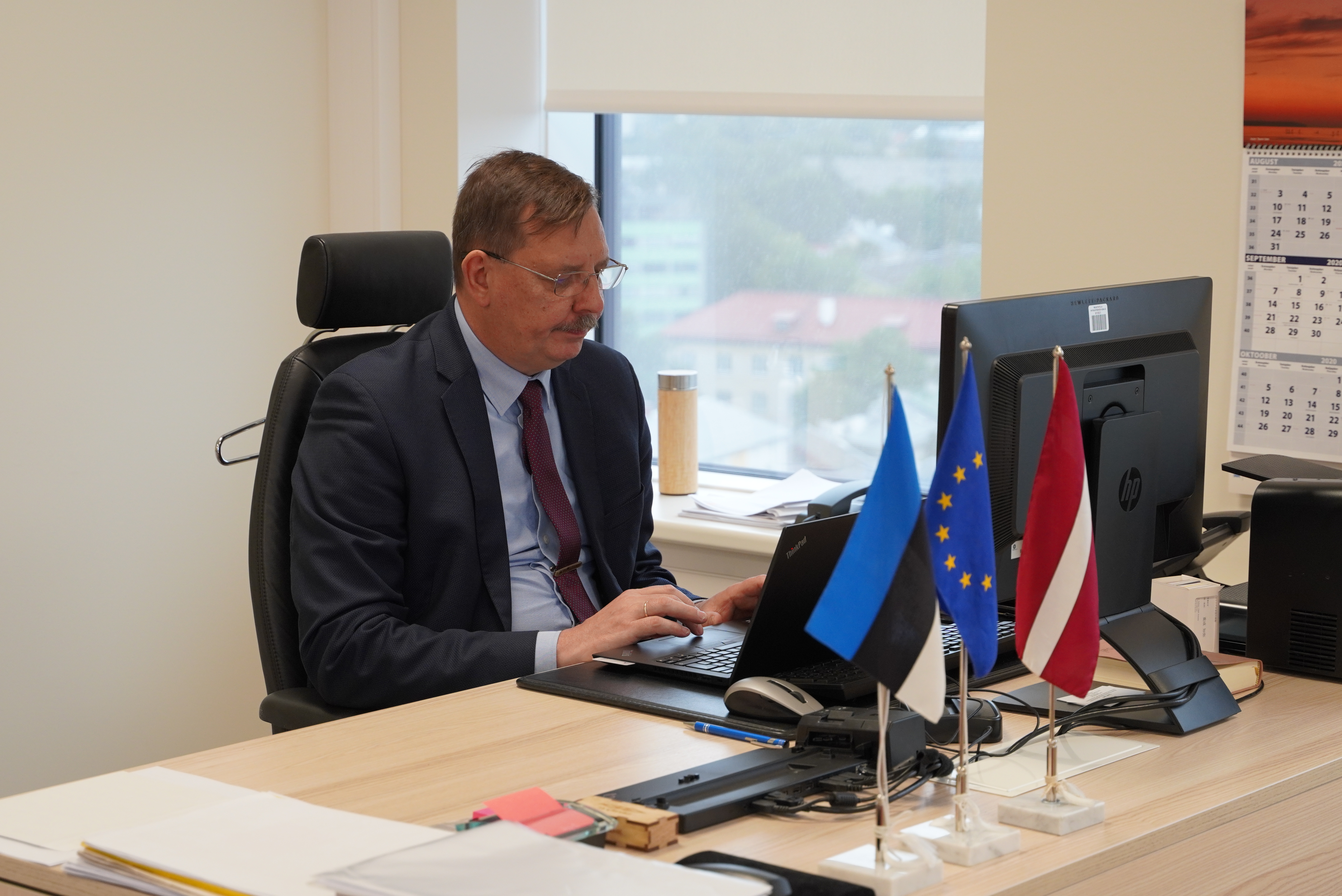
This week, Estonian Minister of Economic Affairs and Infrastructure Taavi Aas and Latvian Minister of Economic Affairs Janis Vitenbergs digitally signed a memorandum of understanding (MoU), which is aimed at the development of an offshore wind farm by the two states. This is the first such agreement in the region, pioneering concept of hybrid off-shore grid, connecting diferent markets, and enabling development of suitable off-shore production sites.
“Good neighbours joining forces in major energy projects is reasonable and also cost efficient.” said Aas. “This kind of cooperation is unique in the world, as two countries will combine their will and knowledge to improve the security of the supply while increasing renewable energy production. It’s equally important that cross-border cooperation makes it possible to apply for European Union co-funding for the construction of the grid.”
This week European Commission introduced the plan to establish even more ambitious goals for 2030 greenhouse gas emissions reductions. Estonia and Latvia share the vision that such cooperation in offshore wind is an excellent solution for moving towards higher goals.
“We believe that this project could be the first of many off-shore wind flagships under the BEMIP regional cooperation. The forthcoming European Commission’s Off-shore Renewable Energy Strategy should pave the way for such projects to materialize by facilitating sufficient financing“ stated Aas and Vitenbergs.
The size of the planned offshore wind farm according to the MoU is up to 1,000 megawatts, which is up to 20 per cent of the power consumption of the two countries. The project will also serve as a proof of concept for hybrid asset consisting of dual use transmission network and off-shore wind park.
The joint project makes it possible to attract investments in offshore wind farms to the region and makes connecting to the grid more affordable for others also. This is also a good opportunity for knowledge transfer from North-Sea Energy Cooperation.
After the states have carried out the necessary studies like environmental impact assessment, they carry out an auction for the superficial license. Estonia and Latvia will split the costs and income of the project equally.

